
How to find off-market commercial real estate
Off-market commercial real estate is commercial property that is not publicly listed for sale. To find it, start from the site and the owner instead of a listing: decide where you want to buy, filter the parcels to the ones that fit, identify the person who controls each one, and reach out before anyone else does.
This guide is for commercial brokers, investment and land brokers, acquisition teams, developers and brands doing site selection: people who already know how listings work and want to reach sites and owners earlier.

- Define the hunt: a geography and a site profile, not a "for sale" flag.
- Filter to fit: zoning, lot size, building size, frontage, ownership.
- Find the real owner: the person behind the LLC, with a cell and email.
- Reach out and track it: a repeatable sequence and one place for replies.
What is off-market commercial real estate?
Off-market commercial real estate is commercial property that is not publicly advertised or listed for sale, along with the research and private transactions that happen away from public listing sites.
Two very different situations sit under that label. Some unlisted properties are quietly for sale: the owner or their broker is talking to a short list of buyers without putting the property on a public site. Many more belong to owners who have not listed and may not have decided to sell, but who would take a conversation with a serious buyer who shows up with the right reason at the right time.
The second group is far larger than the first. At any moment, only a small share of commercial property is actively marketed, while every parcel has an owner whose plans change: a lease rolls, a partnership winds down, a portfolio gets rebalanced. Off-market sourcing is the work of finding those owners before their property reaches a listing, or before it ever would.
One note on scope: this page is about commercial property. When a residential listing site shows a home as "off market," it usually means the listing ended, which is a different thing.
Off-market vs. on-market vs. a pocket listing
| Type | Is an agent selling it? | How buyers find it |
|---|---|---|
| On-market | Usually | Public listing sites, broker email blasts, signage |
| Pocket listing | Yes, marketed privately | The listing broker's own network of buyers |
| Off-market (broad) | Often no agent at all | Direct outreach to the owner, relationships, parcel research |
Every pocket listing is off-market, but most off-market property is not a pocket listing. The largest part of the off-market pool has no broker attached and no sale process underway, which is why finding it takes a different method than browsing.
Why buyers and brokers look off-market
Buyers look off-market to start conversations earlier and with fewer competitors. The specific reasons come up again and again:
- Less publicly shopped competition. When a property is not on a listing site, you are not one of dozens of buyers responding to the same offering memorandum.
- Discretion. Owners, tenants and employees often prefer that a possible sale stays quiet. That preference is also why many owners agree to a private conversation.
- A direct line to the decision-maker. You talk to the person who controls the asset and can learn what they actually want: timing, price, a 1031 exchange, a leaseback.
The caveats belong in the same breath. Off-market is not automatically a better deal or a lower price. Listed properties are not automatically bad. And sourcing off-market takes real work: you will contact many owners for every one who wants to talk, and plenty of owners who say no today say yes in two years. Treat it as a pipeline you build, not a shortcut.
How to find off-market commercial real estate
The method that works is site-first: define where you are hunting, narrow every parcel there to the sites that fit, find the real owner of each one, then reach out and keep the conversation organized. Here is the full playbook.
Define where you are hunting
Pick a geography and a site profile before you look at a single property.Filter for sites that fit
Cut every parcel in the area down to a short list using hard criteria.Find the real owner
Get past the LLC on the deed to a person who can make a decision.Reach out and track it
Contact owners on a repeatable schedule and keep every reply in one place.
Define where you are hunting
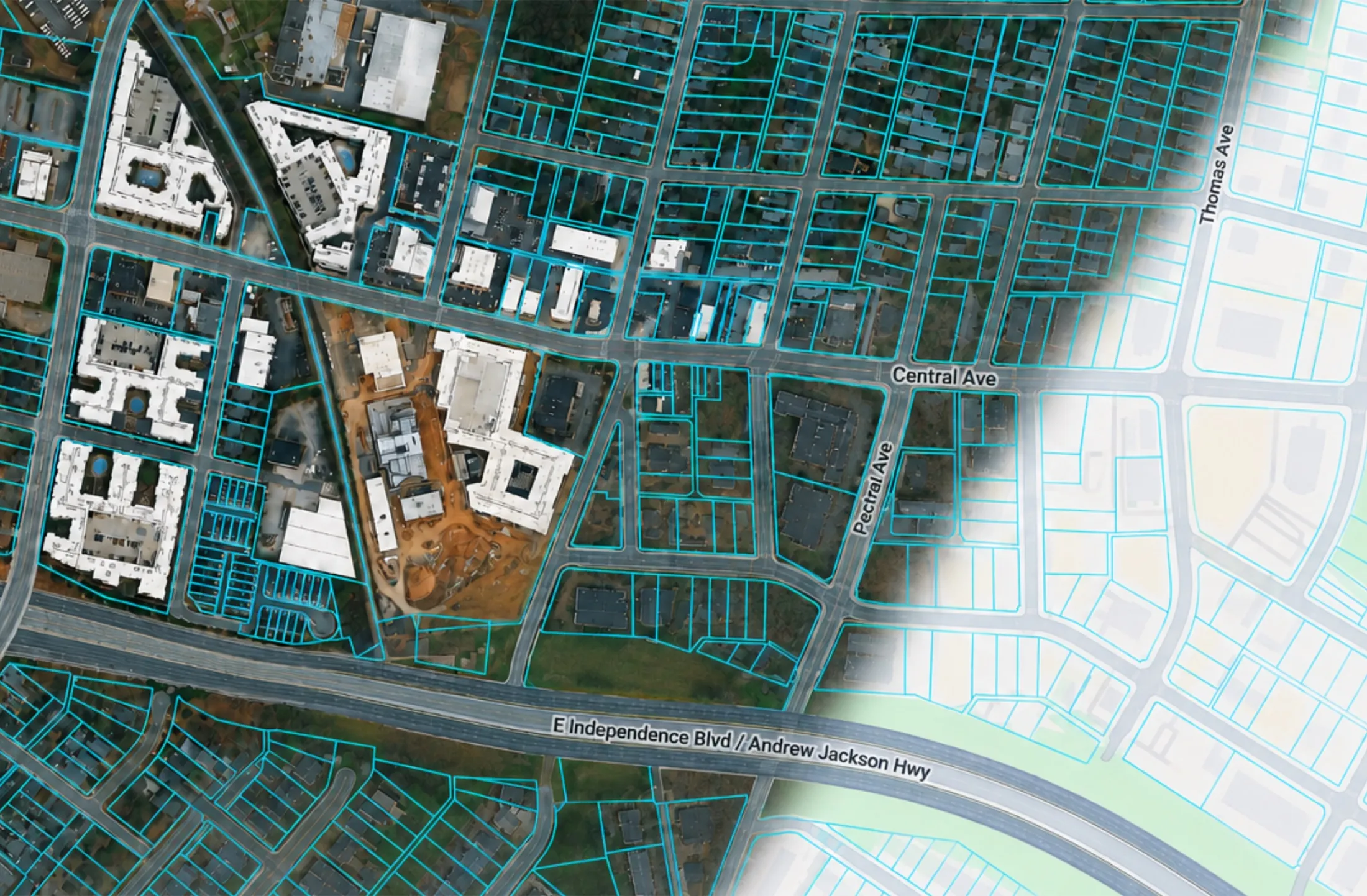
Off-market sourcing starts with a geography and a site profile, not with a "for sale" flag. Decide the asset type, the size range and the use you need, then the area: a stretch of road for a pad site, a submarket for industrial, the trade area around an existing store for a brand. The tighter the definition, the more useful every later step becomes.
Filter for sites that actually fit
A good hunt area still holds hundreds or thousands of parcels. Practitioners narrow that universe with hard constraints first: zoning and land use, lot size, building size, road frontage and who owns it. Then softer signals: how long the owner has held it, whether they live out of state, whether the building is vacant, whether the site sits in a flood zone or an Opportunity Zone. The goal is a short list you would actually call.
Get to the real owner, not just the LLC on the deed
Finding the owner is where most off-market efforts stall. Commercial property is commonly held in an LLC, a trust or a chain of holding companies, and the deed shows only the entity name and a mailing address, often a registered agent or an accountant. A letter to that address rarely reaches anyone who can decide.
Good looks like a reachable person: the member, manager or principal who controls the entity, with a mobile number or an email that actually gets to them. Getting there means reading state business filings, following manager LLCs up the chain, checking recorded deeds and matching mailing addresses, then confirming you have the right person.
Reach out and keep track of the conversation
Once you know who to call, the methods are familiar: direct calls, letters, email, and introductions through brokers and investors who know the owner. Software does not replace those relationships. What makes owner outreach work at scale is a repeatable sequence, a reason to talk that is specific to the property, and one place where every reply, note and next step lives so nothing slips.
Relationships still matter
Ask experienced brokers how they find off-market deals and most will say conversations: other brokers, investor groups, lenders, attorneys and private networks. That is right, and it should stay part of your process. The limit is coverage. Relationships surface the deals people happen to mention; they do not let you systematically check every parcel along a corridor or every industrial site in a county. A site-first prospecting process fills that gap, and the two work best together.
Should you only look off-market?
No. Use off-market sourcing to widen your funnel and to start conversations earlier, and keep watching on-market listings. A listed property is not a worse deal because other buyers have seen it, and an unlisted one is not a better deal because they have not. Quality comes from the site, the owner and the terms, not from whether the property was advertised.
Selling a commercial property off-market
Owners sell off-market for privacy, to keep tenants and employees from hearing about a sale early, to deal with a small set of qualified buyers, or to quietly test what the market will pay. The tradeoff is reach: fewer buyers can mean leaving a better bid on the table, so many owners weigh a private process against a full listing.
Either way, diligence, documentation and tax treatment, including any 1031 exchange, still apply. That part is for your attorney, tax advisor and qualified intermediary; this guide is not legal or tax advice.
Frequently asked questions
What does off-market mean in commercial real estate?
How do you find off-market commercial real estate?
How do you find off-market commercial real estate deals?
What is the difference between off-market commercial real estate and a pocket listing?
Is buying off-market commercial real estate a good idea?
Do off-market commercial properties sell for less than listed ones?
Are on-market commercial deals always bad? Should I only look off-market?
What platform can find off-market commercial real estate?
Can off-market commercial real estate be used in a 1031 exchange?
Run this playbook on your market
The fastest way to judge a site-first process is to watch it run on a market you know. Book a Dirtdog demo and we will scan a corridor you choose, show you the owners behind the parcels and set up your first scan for free. You can also see Dirtdog pricing, or read how Dirtdog works.
Related
Find the site. Identify the real owner. Close before it lists.
In 15 minutes we'll run a live scan on a corridor you care about, show you the owners behind the parcels, and set up your first scan for free.
Scans and filters are free. You only spend credits when Dirtdog researches an owner or returns contacts.